
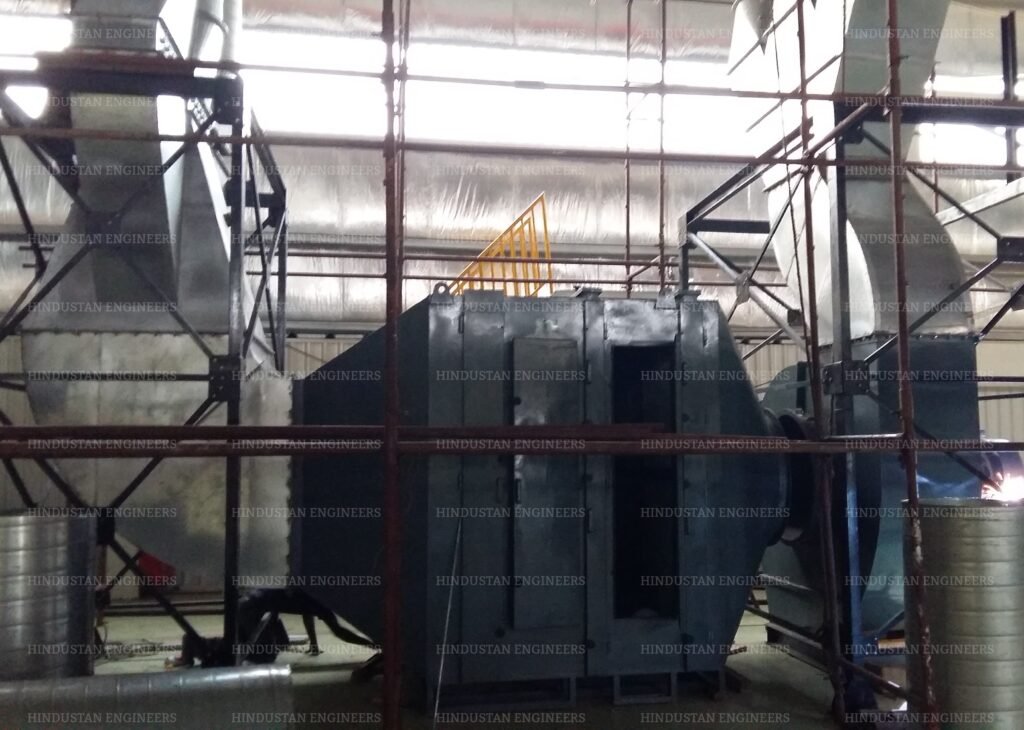
A dry scrubber is a type of air pollution control device used to remove harmful gases and particulates from industrial exhaust gases. Unlike wet scrubbers that use a liquid to capture pollutants, dry scrubbers use a dry sorbent or material to chemically react with and capture pollutants from the gas stream.
The basic operation of a dry scrubber involves passing the polluted gas stream through a chamber or vessel where the dry sorbent material, such as lime, limestone, or activated carbon, is introduced. The pollutants in the gas stream react with the sorbent, either through adsorption, absorption, or chemical reaction, resulting in the capture and removal of the contaminants from the gas stream.
Dry scrubbers are commonly used to control emissions of acidic gases, such as sulfur dioxide (SO2) and hydrogen chloride (HCl), as well as certain volatile organic compounds (VOCs) and hazardous air pollutants (HAPs). They are found in various industrial applications, including power plants, waste incinerators, metal smelting operations, and chemical processing facilities.
Advantages of dry scrubbers include lower water usage compared to wet scrubbers, reduced wastewater generation, and the ability to handle high-temperature gas streams. However, they may require careful selection of the appropriate sorbent material and may have limitations in capturing certain types of pollutants.
To get a more in-depth understanding of dry scrubbers and their applications, consider referring to reputable sources such as environmental engineering textbooks, peer-reviewed articles, and industry guidelines.
Dry scrubbing systems typically consist of various components, including:
Scrubbing Chamber: This is where the exhaust gases come into contact with a scrubbing solution or reagent that neutralizes or reacts with the pollutants to remove them from the gas stream.
Reagent Injection System: The dry scrubber system may utilize various reagents such as lime, limestone, sodium bicarbonate, or activated carbon to chemically react with and absorb pollutants from the gas stream.
Particle Removal Devices: Some dry scrubber systems incorporate devices such as bag filters, electrostatic precipitators, or cyclones to capture particulate matter and ensure compliance with emissions standards.
Fan or Blower: A fan or blower is used to create the necessary airflow to move the exhaust gases through the dry scrubber system.
Monitoring and Control System: This system includes monitoring devices, sensors, control panels, and instrumentation to regulate the scrubbing process, optimize performance, and ensure efficient pollutant removal.
Dry scrubbers offer several advantages over wet scrubbers, such as lower water consumption, reduced wastewater generation, and the ability to handle high-temperature gas streams effectively. They are commonly used in industries such as metal processing, power generation, cement manufacturing, chemical production, and incineration facilities to mitigate air pollution and comply with environmental regulations.
When selecting a dry scrubber system, factors to consider include the type and concentration of pollutants to be treated, the gas flow rate, temperature and humidity conditions, space availability for installation, operational costs, and regulatory requirements. Proper design, sizing, installation, and maintenance of the dry scrubber system are essential for achieving effective pollution control and ensuring environmental compliance.
Understanding the principles and components of dry scrubber systems can help industries make informed decisions when implementing air pollution control measures to safeguard air quality and minimize the impact of industrial emissions on human health and the environment